stairs - 100 flights, 22:40
pushups - 100
planks - 3 x 30 sec
Monday, September 29, 2008

Wednesday, September 24, 2008
The Hard Routine Begins
Worked out during lunch - 12:30 to 1:30
Gym was too busy, 10 am would be better
Get to work by 7, work until 10 or 1030, then workout, then lunch, then work
As a benchmark, did "Fight Gone Bad"
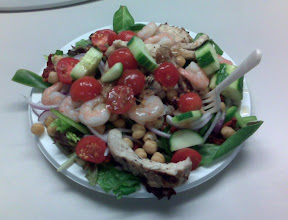
For lunch:
Gym was too busy, 10 am would be better
Get to work by 7, work until 10 or 1030, then workout, then lunch, then work
As a benchmark, did "Fight Gone Bad"
| Round 1 | Round 2 | Round 3 | |
| Wall-ball (8 ft target) | 30 | 20 | 25 |
| Deadlift high-pull | 15 | 15 | 15 |
| Box jump | |||
| Push-press | 15 | 20 | 20 |
| Row (calories) | 15 | 15 | 19 |
| Round total | 75 | 70 | 79 |
| Total | 224 |
For lunch:
Tuesday, September 23, 2008
The day before
The hard routine. Starts tomorrow.
Juice: 3 carrots and 1 beet.
Blender: kale, broccoli, mixed berries, banana, juice fiber, soy milk
|
|
|

Dr Fuhrman's Anti-Cancer Solution
Seven most important steps:
- Vegetables (not fruits) should comprise the largest part of your diet.They should include raw salad vegetables, raw solid vegetables such as broccoli and snow pea pods, as well as cooked vegetables, which should be steamed lightly, lightly sautéed in water, or cooked in soups.
- Sprouts are an excellent concentrated source of phytochemicals. Try mung, radish, alfalfa, and broccoli sprouts. Broccoli sprouts are the richest natural source of sulforaphane.
- Include large amounts of green, leafy vegetables (spinach, romaine lettuce, kale, collards, and chard) and choices from the cabbage family (cabbage, baby bok choy, brussels sprouts, red cabbage, and Chinese cabbage) in your salads.
- Drink fresh-squeezed vegetable juice two or three times a day, made with carrots, beets, tomatoes and greens (kale, collards, wheat grass, mashe, and cabbage). This provides the broadest spectrum of cancer-fighting nutrients. Only use organic vegetables for juicing.
- Beans also contain powerful cancer-fighting compounds, especially the darker colored and reddish beans. Use them in a carrot juice- or tomato juice-based soup with added mushrooms and cruciferous vegetables.
- Use organic raw fruits, especially those with high free radical-absorptive capacity, such as all berries, kiwis, gogi berries, red and black grapes, cherries, papaya, and red apples.
- Use only raw, unsalted seeds and nuts in your diet as your source of fat. No animal fats or oils should be used. Avocado and raw nuts and seeds can be blended to make delicious dips and dressings.
A sample protocol menu
Breakfast
• 6-8 oz. glass of fresh-squeezed vegetable juice made from carrots, beets, kale, parsley, wheat grass, or other greens
• Fresh fruit, especially blueberries, blackberries, strawberries, kiwis, and papaya
• One cup oatmeal with ground flaxseed, walnuts, and added fruit
• Fresh fruit smoothie, blended with watercress, kale, and pomegranate
Lunch
• Large green salad with baby greens, shredded cabbage, and baby bok choy, with a healthful fruit-nut-based dressing
• Vegetable Bean Soup, made with zucchini, leeks, blended cruciferous leafy greens, mushrooms, onion, lentils, beans, parsnips, herbs and spices, cooked in half vegetable juice and half water
• One fresh or frozen fruit (mango or cherries) whipped into a 1/2 cup of pomegranate juice
Dinner
• Glass of vegetable juice (organic tomato-based) with cruciferous greens added such as cabbage,
watercress, and arugula
• Blended salad, 1-2 oz. raw organic spinach, 2-3 oz. leaf lettuce, 1 oz. kale, Chinese cabbage
or bok choy. Blend greens in a high-powered blender with apple and cinnamon, avocado and banana, strawberries and pineapple, orange and lemon, or any other cut fruit (and flavored
vinegar, if desired).
• Lightly steamed greens, such as brussels sprouts, asparagus, and artichokes
• Raw vegetables, tomatoes, baby bok choy, carrots, peppers, broccoli, snow peas, and small raw okra, with dip or dressing
• Vegetable/eggplant stew made with edamame, red peppers, mushrooms, eggplant, tomatoes, cauliflower, frozen peas, and currants, with flavoring such as cinnamon or turmeric
• Frozen organic strawberries whipped with an orange or dried pineapple
• Fresh or frozen fruit (whipped), berries, or other fruit
• Eggplant-Hummus Dip
• Bean Salsa Dip or vinegar
Note:
As much as one avocado and 3 ounces of raw nuts/seeds can be used in the dressings and sauces
each day. Nutritional supplements also are included in the protocol.
Wednesday, September 17, 2008
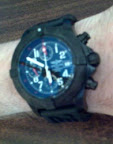
Watches vs Brands

IWC Classic Pilot Big Steel Black Mens Watch IW500401 ($13,500)
vs
Debaufre Nav-B Classic Unitas ($575)

Sunday, August 10, 2008
Bill Hybels on Outreach, evangelism
Interview by Lindy Lowry
As founding and senior pastor of Willow Creek Community Church in South Barrington, Ill. (willowcreek.org), Bill Hybels leads one of the country’s largest and most influential churches. To train church leaders, Hybels and his colleagues founded the Willow Creek Association in 1991, which now includes more than 11,600 churches worldwide. In his latest book, Just Walk Across the Room (Zondervan), Hybels turns his focus to personal evangelism. During a recent phone interview, he talked with Outreach about what he believes is the single-highest value in evangelism, changing course at Willow Creek and the ritual that brings him to his knees each morning.
Outreach: What prompted you to write about personal evangelism for this latest book? Did you sense a real need to focus on it?
Bill Hybels: Yes. Just in the last 30 years, I’ve seen an incredible surge in Christians knowing how to share with other Christians. They know how to open up their lives to each other, how to ask for help, how to pray for each other.
But in the same time period, I have not seen near the same progress in Christians feeling comfortable in conversations with people outside the circle of faith.
What have our local churches missed then? Why are we producing Christians who aren’t comfortable talking about spirituality with others who don’t share their beliefs?
BH: So much of it is awareness, vision and training. Churches left to themselves will always devolve into a kind of inward-looking dynamic. They have to be inspired to be outreach-oriented. And they have to instill a love for Jesus. People who walk across rooms have landed on the belief that the God they know is worth knowing.
Moreover, we have to teach people to engage in conversations with those who believe differently than they do or maybe don’t have any spiritual beliefs at all. Personal evangelism, or having conversations about God, with people far from God should eventually become as natural to us as breathing.
What’s the best way, based on your experience, to train leaders to instill in their congregations a passion for connecting with the unchurched?
BH: When we train pastors, the first thing we do is point them to the example of our ultimate leader, Jesus Christ. We point out dozens of passages where the scriptures inform us of how naturally Jesus had conversations with people. He invited himself to Zacchaeus’ house for dinner, even when everyone knew he was a crook. Jesus said to him, “You’re someone I would be very interested in having dinner with, and I’d be curious to know your story!” So looking at the Master Evangelist and the ease with which He had conversations with people outside the circle of faith becomes catalytic in the lives of church leaders.
From there, we explain to pastors that lost people really do matter to the Father, and if they matter to Him, they ought to matter to us. Then I try to inspire pastors from a spiritual formation standpoint, explaining that there is a unique work of God that happens in the life of someone who’s serious about spreading the message of Christ.
You’ve experienced that work of God firsthand?
BH: Yes, I’m involved in a sailing team, and we’ve become very close. I’ve watched some of them over the years head down the road to self-destruction because of substance abuse or thrill-seeking behaviors. And it’s absolutely heart-breaking to know and love someone and watch him try to handle the complexities of life without the help and guidance of a loving God. It makes me pray differently. It helps me preach differently. There is a marvelous spiritual formation thing that happens inside someone who’s serious about evangelism, but it only happens when you stick your neck out and get involved in evangelistic endeavors.
Then what keeps people from engaging? What do you identify as the greatest obstacle to evangelism today?
BH: Fear. The average Christian in today’s churches is afraid she won’t get something right or that someone will ask her a question she can’t answer and she’ll blow the whole thing.
And I say to people, “OK, then let’s talk about fear!” If you could hear the voice of God prompt you to walk across the room and start a conversation and you obeyed—even if, by your standard, it didn’t lead anywhere—if that hearing and obeying constituted success, could you do that? Most people say, “Yes, I could do that.”
Then what if the conversation progressed to you asking him about his spiritual background? If that conversation goes nowhere, would you still be OK, knowing that you heard God and obeyed? What if he asks you for a book or CD, and that doesn’t go any further, would you still feel like you succeeded spiritually because you heard and obeyed?
The idea of doing only what the Spirit prompts and not being responsible for necessarily leading someone to Christ or correctly answering a ton of questions just boggles people’s minds. When you break down evangelism to small interactions, people tend to relax a little.
Many Christians are afraid that starting spiritual conversations may strong-arm or create distance between friends or family members.
BH: I remember talking to the spouse of a guy on my sailing team. About the third time I talked to her, I gently tried to steer the conversation to spiritual matters, and she said, “I had a horrible religious experience. This is such an area of pain for me; let’s give this a rest.”
I told her I wanted to honor her request and then asked, “How long should we rest it? Can I check back with you in six months or a year to see if there has been any healing? I’d like to pray for you along the way, so you tell me when would be a good time to check back.” She kind of laughed and said, “Let’s rest it for at least a year.”
A year later, we’d gotten to know each other a lot better, and she’d seen me in a lot of other situations. She was ready to talk. I’d proven my friendship to her and the rest of the crew members. And I had honored her by taking seriously her request to not talk about God until she was ready.
In other words, it all unfolded naturally. In our efforts to train Christians to share their faith, have we become too focused on strategies and methods?
BH: It’s taken me the better part of my adult life to understand this. But I believe the single-highest value in the personal evangelistic adventure is being attentive to and being cooperative with the promptings of the Holy Spirit! People don’t expect me to say that. They think I’m nuts to connect promptings and the works of the Holy Spirit with old-fashioned soul-winning, which just shows you how far sharing our faith has strayed from what it ought to be. We ought to begin our day by telling the Holy Spirit that in every conversation we have today, we’ll be listening for His voice or to the little cues that people drop. Maybe they’re only one resource—a conversation, an invitation from a friend or a copy of their own Bible—away from really making spiritual progress.
I’m not suggesting a new evangelism program or new formulas or things to memorize. I am saying that being more attentive to and cooperative with the Holy Spirit would open more doors of opportunity—to say a word for God, or to listen to an unsaved person’s story—than you can imagine!
You’re talking about seeing evangelism as a process then, rather than a one-time event in someone’s life.
BH: We used to think the only miracle in the evangelistic process that we could anticipate would be that singular time when a person dropped to her knees and prayed the prayer to trust Christ. But I find that the evangelistic adventure is filled with a whole string of mini-miracles from the first time you watch the love of God melt a hard heart of a non-church person.
Often, we miss the beauty of going through the process with people from -10 in their relationship with God, up to -8, -4, 2. We need to learn to see the whole experience of listening to people’s pain and their story before we feel the need to tell our story—and live with the idea that maybe we’re only supposed to be warming up these people gradually.
How can churches equip their congregations to tell their story of faith? Is there a practical teaching tool you’ve used?
BH: A couple of years ago at our mid-week service, I preached on the importance of telling your story and telling it effectively. Afterward, we flashed an e-mail address on the screen and asked people to write in 100 words or less their story of how they came to Christ and e-mail it to us. A whole team of people helped me go through thousands of e-mails, and we returned their e-mails saying, “Way to go!” or “This part needs work,” or “There was an air of superiority in your story, so do it again and e-mail us the revision.” We were dead serious about it, but as a result, folks at Willow got really good at shaping their brief, clear and humble faith stories.
These days, a lot of churches don’t have a mid-week service, and it’s not often that they use the weekend worship service to do evangelism training. Have you seen an increasing number of churches that don’t really have an outlet for it?
BH: I have. Sometimes, the only delivery system for a church that has only a weekend service is through its small groups. But I also feel that the value of personal evangelism is mission-critical enough that a pastor could easily call together the congregation and say, “Look, we’re going to offer four additional classes to go through this material to get everybody dialed in and thinking about evangelism.”
When a pastor takes a blow torch to one of his or her church’s core values, the Spirit of God tends to swing spiritual doors wide open.
I know that Willow Creek recently adopted the neighborhood connection model that Randy Frazee implemented at Pantego in Fort Worth, Texas, before coming to Willow two years ago. Why the shift?
BH: We asked the question, “If our people are going to make an evangelistic impact throughout the next 10 to 15 years of their lives, where might they focus that evangelistic energy?” Because people change jobs so often now, which didn’t happen 30 years ago, and because commute times are so long, there are really only two places left where people have some measurable amount of stability and where they can anticipate having time available with people who are outside the family of faith—their job and neighborhood.
And are you seeing it work?
BH: Turning Willow is like turning the Titanic. So it has taken Randy almost a full year to instill the neighborhood values and strategy into our staff and leaders. We really just ramped up in September. Training people on how to have conversations naturally, how to listen to others’ stories before telling your own and then how to tell your story is essential to making this neighborhood ministry really work. A lot of prayer has gone into the launch of this ministry.
That reminds me of something I heard about a morning ritual of yours. Several years ago, you began getting out of bed literally on your knees to start the day with prayer. Is that still a habit?
BH: It is! I did it this morning, in fact. It takes a little finagling to get my hips and legs to swing just right, so that my knees come down before my feet, but it’s a necessary exercise to counteract my Type-A tendencies. If I get out of bed and my feet hit the floor first, then I’m off to the races with my own program. For me to stay on God’s program, I have to start early, surrender early and make an early request of Him to be used that day. I tell Him I desire His guidance and ask Him to open spiritual doors throughout my day.
When you start to look at evangelism in that light, you see yourself differently— not as a sales person—but as an instrument in the hands of God.
-Outreach magazine, "Outreach Interview," November/December 2006
Tuesday, July 29, 2008
Fuhrman's nutrient density index
| Kale Collards Bok Choy Spinach Cabbage Red Pepper Romn Lettuce Broccoli Cauliflower Green Peppers Artichoke Carrots Asparagus Strawberries Tomatoes Plums Blueberries Iceberg Lettuce Cantaloupe Flax Seeds | 1000 1000 824 739 481 420 389 342 295 258 244 240 234 212 164 157 130 110 109 100 44 | Tofu SweetPotatoes Apples Peaches KidneyBeans GreenPeas Lentils Pineapple Avocado Oatmeal Mangoes Cucumbers Soybeans Sunflower Seeds Brown Rice Salmon Shrimp Skim Milk White Potatoes Grapes Walnuts | 86 83 76 73 71 70 68 64 64 53 51 50 48 45 41 39 38 36 31 31 29 | Bananas Chicken Breast Eggs Low Fat Yogurt Corn Almonds WWheat Bread Feta Cheese Whole Milk Ground Beef White Pasta White Bread Peanut Butter Apple Juice Swiss Cheese Potato Chips American Cheese Vanilla Ice Cream French Fries Olive Oil Cola | 30 27 27 26 25 25 25 21 20 20 18 18 18 16 15 11 10 9 7 2 1 |
Thursday, July 24, 2008
7 Minute Abs? 8 Minute Abs? What About 6 Minute Abs?
 DIRECTIONS:
- Lie on your side with your right hand on the ground or use an exercise mat. For beginners, it is recommended to begin this exercise on your elbow.
- Lift yourself up to form a plank with your right arm straight and your left arm on your side.
- Remember to keep your body in a straight line, tightening your abs and butt muscles. You might want to start in front of a mirror to learn the technique
["We guarantee it…If you're not happy with the first 7 minutes. We are going to send you the extra minute free!"]
Planks…A Simple, Yet Effective Ab Exercise
Anyone who has been reading the posts on this site for a while knows I'm a HUGE fan of the plank exercise. I really enjoy doing the plank exercise, because it is the perfect ab exercise in my opinion. It has been proven to promote good posture and is a good exercise to do to protect against back injuries. Planks also promote even ab development. What I mean by that, is that this exercise seems to work the upper lower and mid part of the abdominal wall evenly. Planks also works all the "detail" muscles well that surround the abs…the obliques, intercostals, etc.
*Here's a site that has a diagram of both the side plank and regular plank: http://www.abs-exercise-advice.com/plank.html
Why I Prefer Planks Over Other Ab Exercises
Other ab exercises generate contractions by shortening and curling your spine to a certain extent. Over time I believe this shortens the hip flexors and can create bad posture along with back problems for a lot of people. Planks, on the other had, generate strong contractions in a neutral position. Think about this…don't you want to display defined six pack abs when you are standing or just lying in the sun? Well…planks are teaching your abs to contract hard in this same neutral position. You are basically training your abs to look sharp when your spine is in a natural position (which is most of the time).
Isometric Exercises Are Perfect For the Abs
The last thing you want to do when working your abs is to get puffy and bulky muscle surrounding your mid section. The abs are like any other muscle, they will increase in size if worked in a typical bodybuilding manner. You could do the 3-5 reps that I normally suggest to increase muscle density, I just don't think it is practical or safe for your spine. Isometric exercises like the planks accomplish the same effect as low rep training…hard contractions without the breaking down of muscle. You will increase muscle density without an increase in muscle size. This is the secret to getting amazing looking abs.
Planks Are an Extremely Time Efficient Way to Work Abs
When you do a 2 minute plank, your muscles are contracting hard the entire 2 minutes. If you did a crunching movement for 2 minutes straight, your abs are only contracted for a portion of that time. I would bet that your abs are in a contracted state for less than 1/3 of the time when doing typical ab exercises. If you look at it this way, planks are about 3 times more efficient. You could do in 10 minutes what it would take you 30 minutes to do in a typical ab workout. Yes…I know this is WAY over simplifying the way exercising affects the body, but you get the point.
My Simple Yet Effective Ab Workout
1) Two minutes doing a right side plank
2) Two minutes doing a left side plank
3) Rest 30 seconds
4) Two minutes doing a regular plank
5) Rest 30-60 seconds
6) Two minutes doing an exercise ball plank
Note: You won't be able to do this your first time out. You may have to cut it down to a minute for each set if you are a beginner. Once you get more advanced see if you can hold the exercise ball plank for over 2 minutes. Once you get really advanced, see if you can string all of this together without rest. If you don't have an exercise ball, just do a regular plank on the floor again for 2 minutes. One last thing…2 minutes is going to feel like a lifetime on that last exercise!
Source
Tuesday, July 1, 2008
Vitamix is the best blender
Consumer Reports rates the Vitamix as the best blender but balk at the price. Their suggestion: Live with a few chunks of ice in your icy drinks and save hundreds of dollars. they obviously don't drink the amount or type of smoothies some of us do.
Vitamix 5000 (85),
Blendtec (79),
Breville (75).
Oster Counterforms (72),
Braun PowerMax (72 and is their Top Pick),
George Foreman Brainstorm (70)
Oster Fusion (70)
KitchenAid KSB580 ( 69)
KitchenAid KSB560 (66)
Villaware Moderno Pro ( (65)
Cuisinart Smarrt power Premier ( 64)
Oster 6878 (62)
Hamilton Beach Wave Power Plus (60)
Vitamix 5000 (85),
Blendtec (79),
Breville (75).
Oster Counterforms (72),
Braun PowerMax (72 and is their Top Pick),
George Foreman Brainstorm (70)
Oster Fusion (70)
KitchenAid KSB580 ( 69)
KitchenAid KSB560 (66)
Villaware Moderno Pro ( (65)
Cuisinart Smarrt power Premier ( 64)
Oster 6878 (62)
Hamilton Beach Wave Power Plus (60)
Would you like heart disease with your coffee?
Issue 1, Sept 2002.
Recent articles in university and medical school-affiliated newsletters have proclaimed that drinking coffee is safe "in moderate amounts" and that coffee is not a "major" risk factor for coronary disease. That should be good news for coffee drinkers. Unfortunately, these reports are misleading because the research behind them was very narrowly focused, looking only at single issues, such as incidence of heart attacks. They ignore the fact that people face a variety of other risks and concerns.
What does it matter if coffee is not a "major" risk factor for heart attack, when its minor risk factors can add up to be substantial contributors to others diseases? Granted, one cup of coffee per day is not likely to cause any significant risks, but the more you drink over this one-cup maximum, the more likely it will interfere with your health.
Research clearly has shown that excessive consumption of caffeinated beverages is dangerous. Caffeine addicts are at higher risk of cardiac arrhythmias, which can precipitate sudden death. Coffee raises blood pressure, and it also raises both cholesterol and homocysteine, two risk factors for heart disease.
Besides the slightly increased risk of heart disease, there are other problems. First, caffeine is a stimulant. The consumption of caffeine gives you the false impression that you can get by with less sleep. It also reduces the depth of your sleep. Such sleep deprivation results in higher levels of the stress hormone cortisol and interferes with glucose metabolism, which leads to insulin resistance, and subsequent higher baseline glucose level, further promotes aging, blood vessel disease, and other problems. In other words, caffeine consumption promotes inadequate sleep, and less sleep promotes disease and premature aging. There is no substitute for adequate sleep.
The second issue is that drinking coffee boosts estrogen levels. Higher levels of estrogen worsen problems like endometriosis, breast pain, and menstrual disorders. Increased estrogen levels also are associated with higher risk of breast cancer, so it is possible that in the future we may discover that coffee is more dangerous than anyone thought. Of interest is a recent study that showed that women who consumed more than 500 milligrams of caffeine per day (4 to 5 cups of coffee) had nearly 70% higher estrogen levels during the early part of their menstrual cycle than women consuming only one cup or no caffeine. Keep in mind that coffee, which has 40-175 mg of caffeine per cup, is not the sole cause of America's caffeine addiction. Tea has 30-110 mg. per cup and colas have 40-90 mg per 12 oz.
Thirdly, it has been found that drinking even moderate amounts of decaffeinated coffee can quadruple a person's risk of developing rheumatoid arthritis. Since these studies involved decaffeinated coffee, the researchers speculated that organic solvent in the decaf coffee might be the culprit.
Recent articles in university and medical school-affiliated newsletters have proclaimed that drinking coffee is safe "in moderate amounts" and that coffee is not a "major" risk factor for coronary disease. That should be good news for coffee drinkers. Unfortunately, these reports are misleading because the research behind them was very narrowly focused, looking only at single issues, such as incidence of heart attacks. They ignore the fact that people face a variety of other risks and concerns.
What does it matter if coffee is not a "major" risk factor for heart attack, when its minor risk factors can add up to be substantial contributors to others diseases? Granted, one cup of coffee per day is not likely to cause any significant risks, but the more you drink over this one-cup maximum, the more likely it will interfere with your health.
Research clearly has shown that excessive consumption of caffeinated beverages is dangerous. Caffeine addicts are at higher risk of cardiac arrhythmias, which can precipitate sudden death. Coffee raises blood pressure, and it also raises both cholesterol and homocysteine, two risk factors for heart disease.
Besides the slightly increased risk of heart disease, there are other problems. First, caffeine is a stimulant. The consumption of caffeine gives you the false impression that you can get by with less sleep. It also reduces the depth of your sleep. Such sleep deprivation results in higher levels of the stress hormone cortisol and interferes with glucose metabolism, which leads to insulin resistance, and subsequent higher baseline glucose level, further promotes aging, blood vessel disease, and other problems. In other words, caffeine consumption promotes inadequate sleep, and less sleep promotes disease and premature aging. There is no substitute for adequate sleep.
The second issue is that drinking coffee boosts estrogen levels. Higher levels of estrogen worsen problems like endometriosis, breast pain, and menstrual disorders. Increased estrogen levels also are associated with higher risk of breast cancer, so it is possible that in the future we may discover that coffee is more dangerous than anyone thought. Of interest is a recent study that showed that women who consumed more than 500 milligrams of caffeine per day (4 to 5 cups of coffee) had nearly 70% higher estrogen levels during the early part of their menstrual cycle than women consuming only one cup or no caffeine. Keep in mind that coffee, which has 40-175 mg of caffeine per cup, is not the sole cause of America's caffeine addiction. Tea has 30-110 mg. per cup and colas have 40-90 mg per 12 oz.
Thirdly, it has been found that drinking even moderate amounts of decaffeinated coffee can quadruple a person's risk of developing rheumatoid arthritis. Since these studies involved decaffeinated coffee, the researchers speculated that organic solvent in the decaf coffee might be the culprit.
Salad absorption
You increase the absorption of the nutrients by adding a fat to the dressing.
Raw salad, 15% absorption
Blended salad, 85% absorption
Salad with fatty dressing, 50% absorption
Avocado, cashew butter, pecan dressing,
15% up to 50%. Dramatically more than without a dressing.
Add acidity to the dressing, a vinegar, pomegranate juice, spices, herbs, onion, garlic
Raisins, goji berries, dates, etc.
Something fatty
Something juicy
Something sweet
Something biting
Raw salad, 15% absorption
Blended salad, 85% absorption
Salad with fatty dressing, 50% absorption
Avocado, cashew butter, pecan dressing,
15% up to 50%. Dramatically more than without a dressing.
Add acidity to the dressing, a vinegar, pomegranate juice, spices, herbs, onion, garlic
Raisins, goji berries, dates, etc.
Something fatty
Something juicy
Something sweet
Something biting
Monday, June 30, 2008
Detoxification
QUESTION:
I have been eating Vegan for 4 months but doing your version of the diet for about a week and I'm breaking out more than usual - mostly on the forehead and upper lip and a little on one cheek. It can't be possible that fruits and vegies are the culprits. Is this detox reaction common and nothing to worry about or could it still be attributed to something I'm eating? Possible culprits - 1) fat from avocado/nuts/seeds? 2) the one sprouted multi-grain tortilla I eat with my salad everyday for my one serving of starch? 3) excess sugar from fruits?
Could that tiny bit of sprouted wheat in the tortilla be causing the inflamatory response?
FUHRMAN:
It is likely the result of transitional detoxification. I advise you be careful not to overeat over the next few weeks to help the quickest resolution. I have had hundreds of great success stories have acne problems resolve so I am sure it is just temporary.
I have been eating Vegan for 4 months but doing your version of the diet for about a week and I'm breaking out more than usual - mostly on the forehead and upper lip and a little on one cheek. It can't be possible that fruits and vegies are the culprits. Is this detox reaction common and nothing to worry about or could it still be attributed to something I'm eating? Possible culprits - 1) fat from avocado/nuts/seeds? 2) the one sprouted multi-grain tortilla I eat with my salad everyday for my one serving of starch? 3) excess sugar from fruits?
Could that tiny bit of sprouted wheat in the tortilla be causing the inflamatory response?
FUHRMAN:
It is likely the result of transitional detoxification. I advise you be careful not to overeat over the next few weeks to help the quickest resolution. I have had hundreds of great success stories have acne problems resolve so I am sure it is just temporary.
Dry eyes
Greenie Grannie, I have been in the ophthalmic field for 22 years. Did your doctor test for dry eyes? What symptoms are you having and what testing did he use? The first thing I would try is filling a sock with some rice, microwaving until warm, (NOT HOT) and place it on your closed eyes and relax for 15 minutes/day. This can be wonderful in relieving dry eyes. Also, have you had LASIK or another refractive surgery? That can exacerbate dry eyes.
Peacebug, thanks. I don't know if he tested or not during my eye exam. What exactly is the test? I've been complaining of eyes being tired and strained. They want to tear (or they do start to tear) mostly when I'm in the car or when I wear eye make up. At times I have to blink alot to get moisture.
--
There are a few things we do when looking at dry eye. The first is tear break up time (TBUT) which involves putting a drop of yellow dye called fluorescein into each eye, looking at the eyes behind the biomicroscope or slit lamp, using a blue filter. We have the patient blink, then use a stopwatch to time how long it takes for the tear film to go from a smooth layer covering the eye to begin breaking up.
There is a test called a Schirmer's test, during which little strips of paper are placed into the lower corner of the patient's eyes, and the patient is instructed to keep looking straight ahead, closing her eyes if she wants to, and sitting for five minutes. The amount of "soaking" of these strips is a decent indicator of dry eye syndrome, although not definitive. It has to be done properly, for one thing, and not every doctor/technician knows the proper techniques.
Then there are the "high tech" methods where they can sample your tears and analyse them in a special machine...this can tell where the dry eye is coming from (which layer of the tear film).
I take it your doctor recommended you use artificial tears? The most important thing to look for is a product that does not have BAK or benzalkonium chloride as a preservative. This is proven to not only aggravate dry eye, but in a study I saw presented just two weeks ago, patients were actually better off not treating their dry eye at all than using a BAK-containing product. (BTW Visine is one of the worst offenders...stay away.)
A non-preserved artificial tear is best and will come in the form of single-dose units or in the form of a "disappearing" preservative, that once exposed to air it becomes neutral. You are probably better off with a single-dose unit. You can also try the sock thing. People with severe cases of dry eye syndrome have found relief in formulas containing Omega 3 EPA and DHA fatty acids, GLA, Vitamin E and other ingredients, over time, find that this replaces the need for artificial tears. But you might want to start with the non preserved artificial tears, resting your eyes every fifteen minutes when using the computer (yes, every fifteen minutes...just look away and blink some full blinks for a minute), and try the sock thing.
--
I have dry eyes and my eye doctor told me to use Thera-tears single dose - no preservatives. it does help....also take Evening Primrose oil, DHA purity... my dry eyes started around menopause and could be related to lack of estrogen during menopause. I am much better now though since doing E2L diet strictly and DHA purity and evening Primrose oil.... but it took a while and they still do get irritated towards the evening or after a long day on the computer...but they are so much better than they used to be...
Elise
--
I've been using drops for dry eye since I was 16 (that makes it 34 years!) - and at my last checkup the eye doc was even suggesting the tear duct surgery. But I think I'll just keep using drops. I personally can't recommend one brand over another and I've used just about everything. But I wish you well with whatever drops you choose. I've just gotten used to having my drops everywhere - on my desk, in the bathroom, in the kitchen, in my purse, in the car..............
--
Anyway, you could have the plugs put into your tear ducts to see if they help. They are removable...I've had mine in for many years. Also if you've been using drops for all this time, make sure they are non-preserved. You are QUITE correct that the brand doesn't matter...the CVS brand will do.
One thing I didn't mention, though, is for nighttime use, a gel with a disappearing preservative is your best bet, and that's what I use. I also use this when I am in planes for any stretch of time. You can also use a single-dose unit of 1% methylcellulose right before bed. It's too thick for daytime use but nice for overnight.
--
My doctor gave me the gel for nighttime use as my eyes occassionally are kind of sealed shut in the morning and it's very unpleasant. Sometimes I even have to put drops in during the night. But the gel also would get into my eyelashes and be a big pain in the butt. Right now I seem to be in a good phase.
Interestingly, I have noticed that although my eyes haven't been "cured" with ETL - they are MUCH worse when I make poor food choices and better, particularly at night, when I'm 100% ETL.
--
Peacebug, thanks. I don't know if he tested or not during my eye exam. What exactly is the test? I've been complaining of eyes being tired and strained. They want to tear (or they do start to tear) mostly when I'm in the car or when I wear eye make up. At times I have to blink alot to get moisture.
--
There are a few things we do when looking at dry eye. The first is tear break up time (TBUT) which involves putting a drop of yellow dye called fluorescein into each eye, looking at the eyes behind the biomicroscope or slit lamp, using a blue filter. We have the patient blink, then use a stopwatch to time how long it takes for the tear film to go from a smooth layer covering the eye to begin breaking up.
There is a test called a Schirmer's test, during which little strips of paper are placed into the lower corner of the patient's eyes, and the patient is instructed to keep looking straight ahead, closing her eyes if she wants to, and sitting for five minutes. The amount of "soaking" of these strips is a decent indicator of dry eye syndrome, although not definitive. It has to be done properly, for one thing, and not every doctor/technician knows the proper techniques.
Then there are the "high tech" methods where they can sample your tears and analyse them in a special machine...this can tell where the dry eye is coming from (which layer of the tear film).
I take it your doctor recommended you use artificial tears? The most important thing to look for is a product that does not have BAK or benzalkonium chloride as a preservative. This is proven to not only aggravate dry eye, but in a study I saw presented just two weeks ago, patients were actually better off not treating their dry eye at all than using a BAK-containing product. (BTW Visine is one of the worst offenders...stay away.)
A non-preserved artificial tear is best and will come in the form of single-dose units or in the form of a "disappearing" preservative, that once exposed to air it becomes neutral. You are probably better off with a single-dose unit. You can also try the sock thing. People with severe cases of dry eye syndrome have found relief in formulas containing Omega 3 EPA and DHA fatty acids, GLA, Vitamin E and other ingredients, over time, find that this replaces the need for artificial tears. But you might want to start with the non preserved artificial tears, resting your eyes every fifteen minutes when using the computer (yes, every fifteen minutes...just look away and blink some full blinks for a minute), and try the sock thing.
--
I have dry eyes and my eye doctor told me to use Thera-tears single dose - no preservatives. it does help....also take Evening Primrose oil, DHA purity... my dry eyes started around menopause and could be related to lack of estrogen during menopause. I am much better now though since doing E2L diet strictly and DHA purity and evening Primrose oil.... but it took a while and they still do get irritated towards the evening or after a long day on the computer...but they are so much better than they used to be...
Elise
--
I've been using drops for dry eye since I was 16 (that makes it 34 years!) - and at my last checkup the eye doc was even suggesting the tear duct surgery. But I think I'll just keep using drops. I personally can't recommend one brand over another and I've used just about everything. But I wish you well with whatever drops you choose. I've just gotten used to having my drops everywhere - on my desk, in the bathroom, in the kitchen, in my purse, in the car..............
--
Anyway, you could have the plugs put into your tear ducts to see if they help. They are removable...I've had mine in for many years. Also if you've been using drops for all this time, make sure they are non-preserved. You are QUITE correct that the brand doesn't matter...the CVS brand will do.
One thing I didn't mention, though, is for nighttime use, a gel with a disappearing preservative is your best bet, and that's what I use. I also use this when I am in planes for any stretch of time. You can also use a single-dose unit of 1% methylcellulose right before bed. It's too thick for daytime use but nice for overnight.
--
My doctor gave me the gel for nighttime use as my eyes occassionally are kind of sealed shut in the morning and it's very unpleasant. Sometimes I even have to put drops in during the night. But the gel also would get into my eyelashes and be a big pain in the butt. Right now I seem to be in a good phase.
Interestingly, I have noticed that although my eyes haven't been "cured" with ETL - they are MUCH worse when I make poor food choices and better, particularly at night, when I'm 100% ETL.
--
Bikhram yoga is not good for you
From Fuhrman's forum:
I (and ALL of my yoga teaching friends and peers) DO NOT recommend Bikram yoga, and with good reason. I do not want to come across as judgmental but I will provide the top 5 reasons for you. This is not intended as gossip, these are well known issues and facts and then you can do what is appropriate for you. But educated is always better than going in blind.
1. The heat is not healthy from a variety of perspectives. The most important issue with the heat is that that intense kind of heat actually encourages the muscles, and ligaments to open up much further than they are actually ready or able to do. While the Bikram folks might tell you that this is a good thing - it is not and it leads to injury and over stretching and hypermobility that is inappropriate. An appropriate temperature for a yoga class is at about 80 degrees, although I often practice in temps that are even somewhat cooler than that. It's the old adage, just because a little bit is good does not mean that a lot is better. In this case that much heat is NOT a good thing.
2. The second issue with the heat is that it often creates nausea, dizziness, lightheadedness and other symptoms of that type. Again, the Bikram folks will tell you that it's detox and that it's good for you. It is not. I have eaten ETL for nearly 2 years now and I've been practicing yoga and healthy eating for 15 - when exercising in that kind of heat makes me vomit and feel faint it is most assuredly NOT detox and it is not good for me to exercise feeling that way. I break a pretty good sweat at 80 degrees, more is not necessary or healthy. It is detrimental to the body and does not promote healing.
3. While injuries can happen in any style of yoga practice there is some evidence that the Bikram style has an inordinate amount of injuries, particularly to the knees. In Bikram yoga they use the word "lock" in relation to the knees, but it is rarely explained just exactly what "lock" means. So when a student hears "lock your knees" they instinctively straighten the leg (which for me and others means the knee is now hyperextended) and freeze the knee. This is quite dangerous to the knee and the ability of the body to move and absorb impact, and can lead to injury.
"Locking the knees" actually should be stated as to "engage the quadriceps so that the kneecap is lifted upwards towards the quadriceps". But the knee is kept soft so that momentum and movement can happen - a pushing off energy, so to speak, should always be available to the body, while standing or in movement. Try walking with a "locked" knee and then try moving with a soft knee - you will immediately be aware of the difference. This use of languaging has been at the root of many an injury within Bikram.
4. Yoga is yoga is yoga is yoga - the ancient wisdom and the asanas have been around for thousands and thousands of years. Bikram decided to take a few of them, modify a few ways of doing things, put the asanas into a specific order, and then copyrighted them. While it may be a legal thing to do in a modern American world - it is the antithesis of an actual yogic life. And this copyright exists so that he could market, franchise, and make money. I have nothing against anyone earning a good living and enjoying the good things in life - but to "copyright yoga" is highly offensive to a whole lot of teachers, practitioners, and true yogis. And it makes one highly suspect as to motive and intent.
5. This is the part that may sound like gossip, but again, it is well-known and well written about. Bikram himself has exhibited a lot of sexual misconduct with his students. He is not the only one, and he is not the only famous one, but it is just additional fuel for the fire for the argument that the man and his yogic style are not in alignment with yogic principles.
I (and ALL of my yoga teaching friends and peers) DO NOT recommend Bikram yoga, and with good reason. I do not want to come across as judgmental but I will provide the top 5 reasons for you. This is not intended as gossip, these are well known issues and facts and then you can do what is appropriate for you. But educated is always better than going in blind.
1. The heat is not healthy from a variety of perspectives. The most important issue with the heat is that that intense kind of heat actually encourages the muscles, and ligaments to open up much further than they are actually ready or able to do. While the Bikram folks might tell you that this is a good thing - it is not and it leads to injury and over stretching and hypermobility that is inappropriate. An appropriate temperature for a yoga class is at about 80 degrees, although I often practice in temps that are even somewhat cooler than that. It's the old adage, just because a little bit is good does not mean that a lot is better. In this case that much heat is NOT a good thing.
2. The second issue with the heat is that it often creates nausea, dizziness, lightheadedness and other symptoms of that type. Again, the Bikram folks will tell you that it's detox and that it's good for you. It is not. I have eaten ETL for nearly 2 years now and I've been practicing yoga and healthy eating for 15 - when exercising in that kind of heat makes me vomit and feel faint it is most assuredly NOT detox and it is not good for me to exercise feeling that way. I break a pretty good sweat at 80 degrees, more is not necessary or healthy. It is detrimental to the body and does not promote healing.
3. While injuries can happen in any style of yoga practice there is some evidence that the Bikram style has an inordinate amount of injuries, particularly to the knees. In Bikram yoga they use the word "lock" in relation to the knees, but it is rarely explained just exactly what "lock" means. So when a student hears "lock your knees" they instinctively straighten the leg (which for me and others means the knee is now hyperextended) and freeze the knee. This is quite dangerous to the knee and the ability of the body to move and absorb impact, and can lead to injury.
"Locking the knees" actually should be stated as to "engage the quadriceps so that the kneecap is lifted upwards towards the quadriceps". But the knee is kept soft so that momentum and movement can happen - a pushing off energy, so to speak, should always be available to the body, while standing or in movement. Try walking with a "locked" knee and then try moving with a soft knee - you will immediately be aware of the difference. This use of languaging has been at the root of many an injury within Bikram.
4. Yoga is yoga is yoga is yoga - the ancient wisdom and the asanas have been around for thousands and thousands of years. Bikram decided to take a few of them, modify a few ways of doing things, put the asanas into a specific order, and then copyrighted them. While it may be a legal thing to do in a modern American world - it is the antithesis of an actual yogic life. And this copyright exists so that he could market, franchise, and make money. I have nothing against anyone earning a good living and enjoying the good things in life - but to "copyright yoga" is highly offensive to a whole lot of teachers, practitioners, and true yogis. And it makes one highly suspect as to motive and intent.
5. This is the part that may sound like gossip, but again, it is well-known and well written about. Bikram himself has exhibited a lot of sexual misconduct with his students. He is not the only one, and he is not the only famous one, but it is just additional fuel for the fire for the argument that the man and his yogic style are not in alignment with yogic principles.
Editor's letter in Inside Triathlon magazine (July 2008)
Dietary Rx...
"While running 70 miles a week is preferable to never breaking a sweat in one's lifetime, unless you adhere to a perfectly compensatory diet crafted and monitored by sports nutritionists, high-volume exercise, year after year, is surprisingly bad for the body. Consistent, intense exercise significantly increases the generation of free radicals, which, in turn, cause cellular damage and amplify the chances of developing cancer and heart disease. Due to this unfortunate side effect, high-mileage runners don't live any longer than sedentary folk, so says my doctor, and if I want to continue living like I do - running as much as I want, staying fashionably thin year round and eating for taste rather than for nutrient content - I better get on board with a supplement regimen, however expensive, that can compensate for my unhealthy lifestyle.
"Unhealthy lifestyle? Wasn't I the paragon of health? Earlier the morning of my appointment, I had run 11 miles and eaten an energy bar, which, albeit, I chased down with 20 ounces of Diet Coke. But couldn't I afford a little carbonated aspartame in an otherwise routine diet of sports and engineered sports nutrition?
"Apparently not. The negative consequences of a 10-year exercise addiction were starting to show - and none too prettily, according to lab work. If I wanted to continue to train like I do, it was going to cost me - $228.27 a month, to be exact."
...
"Despite my supplement habit, a balanced diet is the best way to counter the overproduction of free radicals due to too much training. But how do you follow a balanced diet as an endurance athlete? Or, if you're like me and can't seem to eat enough of the green stuff, min chocolate chip ice cream aside, how do you supplement to offset a less than ideal diet?"
A few observations:
"While running 70 miles a week is preferable to never breaking a sweat in one's lifetime, unless you adhere to a perfectly compensatory diet crafted and monitored by sports nutritionists, high-volume exercise, year after year, is surprisingly bad for the body. Consistent, intense exercise significantly increases the generation of free radicals, which, in turn, cause cellular damage and amplify the chances of developing cancer and heart disease. Due to this unfortunate side effect, high-mileage runners don't live any longer than sedentary folk, so says my doctor, and if I want to continue living like I do - running as much as I want, staying fashionably thin year round and eating for taste rather than for nutrient content - I better get on board with a supplement regimen, however expensive, that can compensate for my unhealthy lifestyle.
"Unhealthy lifestyle? Wasn't I the paragon of health? Earlier the morning of my appointment, I had run 11 miles and eaten an energy bar, which, albeit, I chased down with 20 ounces of Diet Coke. But couldn't I afford a little carbonated aspartame in an otherwise routine diet of sports and engineered sports nutrition?
"Apparently not. The negative consequences of a 10-year exercise addiction were starting to show - and none too prettily, according to lab work. If I wanted to continue to train like I do, it was going to cost me - $228.27 a month, to be exact."
...
"Despite my supplement habit, a balanced diet is the best way to counter the overproduction of free radicals due to too much training. But how do you follow a balanced diet as an endurance athlete? Or, if you're like me and can't seem to eat enough of the green stuff, min chocolate chip ice cream aside, how do you supplement to offset a less than ideal diet?"
A few observations:
- This was in a triathlon magazine
- Even when doctors recognize that there is too much of a good thing, they prescribe supplements
- People do not want to give up their lifestyle
Wednesday, June 25, 2008
A Case Against Cardio (from a former mileage king)
http://www.marksdailyapple.com/case-against-cardio/
Unfortunately, the popular wisdom of the past 40 years – that we would all be better off doing 45 minutes to an hour a day of intense aerobic activity – has created a generation of overtrained, underfit, immune-compromised exerholics. Hate to say it, but we weren’t meant to aerobicize at the chronic and sustained high intensities that so many people choose to do these days. The results are almost always unimpressive. Ever wonder why years of “Spin” classes, endless treadmill sessions and interminable hours on the “elliptical” have done nothing much to shed those extra pounds and really tone the butt?
Don’t worry. There’s a reason why the current methods fail, and when you understand why, you’ll see that there’s an easier, more effective – and fun - way to burn fat, build or preserve lean muscle and maintain optimal health. The information is all there in the primal DNA blueprint, but in order to get the most from your exercise experience, first you need to understand the way we evolved and then build your exercise program around that blueprint.
Like most people, I used to think that rigorous aerobic activity was one of the main keys to staying healthy – and that the more mileage you could accumulate (at the highest intensity), the better. During my 20+ years as a competitive endurance athlete, I logged tens of thousands of training miles running and on the bike with the assumption that, in addition to becoming fit enough to race successfully at a national class level, I was also doing my cardiovascular system and the rest of my body a big healthy favor.
Being the type A that I am, I read Ken Cooper’s seminal 1968 book Aerobics and celebrated the idea that you got to award yourself “points” for time spent at a high heart rate. The more points, the healthier your cardiovascular system would become. Based on that notion, I should have been one of the healthiest people on the planet.
Unfortunately, I wasn’t - and that same mindset has kept millions of other health-conscious, nirvana-seeking exercisers stuck in a similar rut for almost 40 years. It’s time to get your head out of the sand and take advantage of your true DNA destiny, folks!
The first signal I had that something was wrong was when I developed debilitating osteoarthritis in my ankles…at age 28. This was soon coupled with chronic hip tendonitis and nagging recurrent upper respiratory tract infections. In retrospect, it is clear now that my carbohydrate-fueled high-intensity aerobic lifestyle was promoting a dangerous level of continuous systemic inflammation, was severely suppressing other parts of my immune system and the increased oxidative damage was generally tearing apart my precious muscle and joint tissue.
The stress of high intensity training was also leaving me soaking in my own internal cortisol (stress hormone) bath. It wasn’t so clear to me at the time exactly what was happening – in fact it was quite confusing, since I was doing so much of this so-called “healthy” aerobic exercise – but I had no choice but to give up racing, unable to train at anywhere near the intensity required to stay at an elite level.
To make ends meet…
…I became a “personal trainer” and I refocused my attention on training average “non-athletic” people to achieve reasonable levels of general fitness and health. Of course, we lifted weights as part of the overall plan (and I will go into greater detail on that important aspect of fitness in a later post), but for the aerobic component of their training, I started doing long walks or hikes or easy bike rides with them. My many clients got the benefit of me actually working out right along side them and I got the benefit of 3 to 5 hours a day of very low intensity aerobic work (well, very low for me anyway). It was refreshing and really didn’t take much effort on my part, but I knew I had to be deriving at least some small benefit from those hours.
Since I didn’t have much time left in the week for my own workouts, once or twice a week I would do a very short but very intense workout for my own benefit, usually sprints at the track or “hill repeats” of 2-3 minutes each on the bike. Lo and behold, within a year, my injuries were healing, I was rarely sick and I was even back to occasionally racing – faster than ever. Something “primal” was happening and it made total sense in the context of the DNA blueprint. I was training like my hunter-gatherer ancestors, building my aerobic capacity slowly and steadily without overstressing my adrenals or my immune system, training my body to derive more energy from fats (and not glucose), requiring far fewer carbohydrate calories from my diet, and building muscle with occasional quick bursts of speed and intensity. I was suddenly both fit AND healthy. My Primal Health system was kicking in and it all made perfect sense.
Humans, like all mammals, evolved two primary energy systems that powered the skeletal muscles of our hunter-gatherer ancestors 40,000 years ago and that would keep us all well-powered the same way today, if we weren’t so bent on circumventing them with our ill-fated (literally) lifestyle choices.
The first energy system relied heavily on the slow burning of fats, keeping us fueled while we were at rest or sleeping, yet also allowing for continuous or intermittent low levels of aerobic activity (think of our ancestors walking across the savannah for hours foraging for roots, shoots, berries, grubs, insects and the occasional small animal). It makes sense. Fats are very efficient fuels that are stored easily in the fat cells and burn easily and cleanly when lots of oxygen is present (as when we are breathing normally). Even if there’s no food in the immediate area, a well-trained fat-burning hunter-gatherer could continue walking and foraging for days without compromising his or her health or efficiency.
The second major energy system we developed through evolution was an ATP-fueled system that allowed for intense loads of work to be done in very brief bursts (think of our hunter-gatherer ancestors sprinting to the safety of a tree to avoid being eaten by a lion). ATP is always sitting right there within the muscle cells, available in a split second, and it is the highest octane fuel we have. In fact, it’s ATP and adrenaline that allow the little old lady to lift the front end of the Ford Fairlane off her husband when the jack fails. Unfortunately, the muscles can only store about 20 seconds worth of this precious fuel to complete life-or-death tasks. If our ancestors survived that quick sprint to safety, their ATP reserves were filled again within minutes using the other energy systems.
Furthermore, that brief burst of intense energy sparked a small “growth spurt” in the muscle, making it even stronger for the next encounter with the next lion – a true survival adaptation.
(Note: While our energy systems are actually quite complex, varied and interrelated, I have simplified things here to make it easier to “digest”.)
Bottom line: Fats and ATP were the two primary energy sources for locomotion: we either moved slowly and steadily or “fight or flight” fast, and we became stronger and healthier the more we used only those energy systems.
But here’s the real take-home message for us: We did not evolve to rely heavily on a carbodydrate-fueled energy system, and yet, carbohydrate metabolism seems to rule our lives today. Yes, carbohydrate (in the form of glucose) can play a major role in the production of energy in skeletal muscle, but it turns out that the heart and skeletal muscle prefer fatty acids (fat) as fuel over glucose.
Our hunter-gatherer ancestors didn’t regularly ramp their heart rates up for over an hour a day like so many of us do now. Even when the concept of organized hunting came along, it would appear that our hunter-gatherer ancestors relied more on superior tracking ability (using our highly evolved and exceptionally large brains) and walking (using our superior fat-burning systems), rather than on actually “chasing down” their prey. In fact, squandering valuable energy reserves (and increasing carbohydrate [glucose] metabolism by a factor of ten) by running hard for long periods of time was so counterproductive it would have likely hastened your demise (imagine chasing some game animal for a few hours and – oops - not succeeding in killing it. You’ve spent an incredible amount of energy, yet now you have no food to replace that energy. You have suddenly become some other animals prey because you are physically exhausted).
So, what does all that mean for us in the 21st century seeking to maximize our health and fitness?
Well, we know that this current popular high intensity aerobic pursuit is a dead-end. It requires huge amounts carbohydrate (sugar) to sustain, it promotes hyperinsulinemia (overproduction of insulin), increases oxidative damage (the production of free radicals) by a factor of 10 or 20 times normal, and generates high levels of the stress hormone cortisol in many people, leaving them susceptible to infection, injury, loss of bone density and depletion of lean muscle tissue – while encouraging their bodies to deposit fat. Far from that healthy pursuit we all assumed it was! What, then, is the answer?
Knowing what we know about our hunter-gatherer ancestors and the DNA blueprint, we would ideally devise an aerobics plan that would have us walking or hiking several hours a day to maximize our true fat-burning systems and then doing intermittent “life or death” sprints every few days to generate those growth spurts that create stronger, leaner muscle.
However, since allocating a few hours a day to this pursuit is impractical for most people, we can still create a plan that has a fair amount of low level aerobic movement, such as walking briskly, hiking, cycling at a moderate pace, etc a few times a week and keep it at under an hour. Then, we can add a few intense “interval” sessions, where we literally sprint (or cycle or do anything intensely) for 20, 30 or 40 seconds at a time all out, and do this once or twice a week.
If you are willing to try this new approach, but haven’t sprinted for a while, you may want to ease into it. Start with maybe three or four the first time, resting two minutes in between and, after a few weeks of doing this, work your way up to a workout that includes six or eight all-out sprints after a brief warm-up. An easy few minutes of stretching afterwards and you’ve done more in less time than you could ever accomplish in a typical “80-85% Max Heart Rate” cardio” workout. That’s exactly type of the plan I do myself and that I give all of my trainees now.
Let’s recap:
The benefits of low level aerobic work (walking, hiking, cycling, swimming):
- increases capillary network (blood vessels that supply the muscle cells with fuel and oxygen)
- increases muscle mitochondria
- increases production of fat-burning and fat-transporting enzymes
- more fun, because you can talk with a partner while doing it
The benefits of interval training (sprinting in short intense bursts)
- increases muscle fiber strength
- increases aerobic capacity (work ability)
- increases muscle mitochondria (the main energy production center in muscle)
- increases insulin sensitivity
- increases natural growth hormone production
The costs of chronic (repetitious) mid- and high-level aerobic work
- requires large amounts of dietary carbohydrates (SUGAR)
- decreases efficient fat metabolism
- increases stress hormone cortisol
- increases systemic inflammation
- increases oxidative damage (free radical production)
- boring!
Unfortunately, the popular wisdom of the past 40 years – that we would all be better off doing 45 minutes to an hour a day of intense aerobic activity – has created a generation of overtrained, underfit, immune-compromised exerholics. Hate to say it, but we weren’t meant to aerobicize at the chronic and sustained high intensities that so many people choose to do these days. The results are almost always unimpressive. Ever wonder why years of “Spin” classes, endless treadmill sessions and interminable hours on the “elliptical” have done nothing much to shed those extra pounds and really tone the butt?
Don’t worry. There’s a reason why the current methods fail, and when you understand why, you’ll see that there’s an easier, more effective – and fun - way to burn fat, build or preserve lean muscle and maintain optimal health. The information is all there in the primal DNA blueprint, but in order to get the most from your exercise experience, first you need to understand the way we evolved and then build your exercise program around that blueprint.
Like most people, I used to think that rigorous aerobic activity was one of the main keys to staying healthy – and that the more mileage you could accumulate (at the highest intensity), the better. During my 20+ years as a competitive endurance athlete, I logged tens of thousands of training miles running and on the bike with the assumption that, in addition to becoming fit enough to race successfully at a national class level, I was also doing my cardiovascular system and the rest of my body a big healthy favor.
Being the type A that I am, I read Ken Cooper’s seminal 1968 book Aerobics and celebrated the idea that you got to award yourself “points” for time spent at a high heart rate. The more points, the healthier your cardiovascular system would become. Based on that notion, I should have been one of the healthiest people on the planet.
Unfortunately, I wasn’t - and that same mindset has kept millions of other health-conscious, nirvana-seeking exercisers stuck in a similar rut for almost 40 years. It’s time to get your head out of the sand and take advantage of your true DNA destiny, folks!
The first signal I had that something was wrong was when I developed debilitating osteoarthritis in my ankles…at age 28. This was soon coupled with chronic hip tendonitis and nagging recurrent upper respiratory tract infections. In retrospect, it is clear now that my carbohydrate-fueled high-intensity aerobic lifestyle was promoting a dangerous level of continuous systemic inflammation, was severely suppressing other parts of my immune system and the increased oxidative damage was generally tearing apart my precious muscle and joint tissue.
The stress of high intensity training was also leaving me soaking in my own internal cortisol (stress hormone) bath. It wasn’t so clear to me at the time exactly what was happening – in fact it was quite confusing, since I was doing so much of this so-called “healthy” aerobic exercise – but I had no choice but to give up racing, unable to train at anywhere near the intensity required to stay at an elite level.
To make ends meet…
…I became a “personal trainer” and I refocused my attention on training average “non-athletic” people to achieve reasonable levels of general fitness and health. Of course, we lifted weights as part of the overall plan (and I will go into greater detail on that important aspect of fitness in a later post), but for the aerobic component of their training, I started doing long walks or hikes or easy bike rides with them. My many clients got the benefit of me actually working out right along side them and I got the benefit of 3 to 5 hours a day of very low intensity aerobic work (well, very low for me anyway). It was refreshing and really didn’t take much effort on my part, but I knew I had to be deriving at least some small benefit from those hours.
Since I didn’t have much time left in the week for my own workouts, once or twice a week I would do a very short but very intense workout for my own benefit, usually sprints at the track or “hill repeats” of 2-3 minutes each on the bike. Lo and behold, within a year, my injuries were healing, I was rarely sick and I was even back to occasionally racing – faster than ever. Something “primal” was happening and it made total sense in the context of the DNA blueprint. I was training like my hunter-gatherer ancestors, building my aerobic capacity slowly and steadily without overstressing my adrenals or my immune system, training my body to derive more energy from fats (and not glucose), requiring far fewer carbohydrate calories from my diet, and building muscle with occasional quick bursts of speed and intensity. I was suddenly both fit AND healthy. My Primal Health system was kicking in and it all made perfect sense.
Humans, like all mammals, evolved two primary energy systems that powered the skeletal muscles of our hunter-gatherer ancestors 40,000 years ago and that would keep us all well-powered the same way today, if we weren’t so bent on circumventing them with our ill-fated (literally) lifestyle choices.
The first energy system relied heavily on the slow burning of fats, keeping us fueled while we were at rest or sleeping, yet also allowing for continuous or intermittent low levels of aerobic activity (think of our ancestors walking across the savannah for hours foraging for roots, shoots, berries, grubs, insects and the occasional small animal). It makes sense. Fats are very efficient fuels that are stored easily in the fat cells and burn easily and cleanly when lots of oxygen is present (as when we are breathing normally). Even if there’s no food in the immediate area, a well-trained fat-burning hunter-gatherer could continue walking and foraging for days without compromising his or her health or efficiency.
The second major energy system we developed through evolution was an ATP-fueled system that allowed for intense loads of work to be done in very brief bursts (think of our hunter-gatherer ancestors sprinting to the safety of a tree to avoid being eaten by a lion). ATP is always sitting right there within the muscle cells, available in a split second, and it is the highest octane fuel we have. In fact, it’s ATP and adrenaline that allow the little old lady to lift the front end of the Ford Fairlane off her husband when the jack fails. Unfortunately, the muscles can only store about 20 seconds worth of this precious fuel to complete life-or-death tasks. If our ancestors survived that quick sprint to safety, their ATP reserves were filled again within minutes using the other energy systems.
Furthermore, that brief burst of intense energy sparked a small “growth spurt” in the muscle, making it even stronger for the next encounter with the next lion – a true survival adaptation.
(Note: While our energy systems are actually quite complex, varied and interrelated, I have simplified things here to make it easier to “digest”.)
Bottom line: Fats and ATP were the two primary energy sources for locomotion: we either moved slowly and steadily or “fight or flight” fast, and we became stronger and healthier the more we used only those energy systems.
But here’s the real take-home message for us: We did not evolve to rely heavily on a carbodydrate-fueled energy system, and yet, carbohydrate metabolism seems to rule our lives today. Yes, carbohydrate (in the form of glucose) can play a major role in the production of energy in skeletal muscle, but it turns out that the heart and skeletal muscle prefer fatty acids (fat) as fuel over glucose.
Our hunter-gatherer ancestors didn’t regularly ramp their heart rates up for over an hour a day like so many of us do now. Even when the concept of organized hunting came along, it would appear that our hunter-gatherer ancestors relied more on superior tracking ability (using our highly evolved and exceptionally large brains) and walking (using our superior fat-burning systems), rather than on actually “chasing down” their prey. In fact, squandering valuable energy reserves (and increasing carbohydrate [glucose] metabolism by a factor of ten) by running hard for long periods of time was so counterproductive it would have likely hastened your demise (imagine chasing some game animal for a few hours and – oops - not succeeding in killing it. You’ve spent an incredible amount of energy, yet now you have no food to replace that energy. You have suddenly become some other animals prey because you are physically exhausted).
So, what does all that mean for us in the 21st century seeking to maximize our health and fitness?
Well, we know that this current popular high intensity aerobic pursuit is a dead-end. It requires huge amounts carbohydrate (sugar) to sustain, it promotes hyperinsulinemia (overproduction of insulin), increases oxidative damage (the production of free radicals) by a factor of 10 or 20 times normal, and generates high levels of the stress hormone cortisol in many people, leaving them susceptible to infection, injury, loss of bone density and depletion of lean muscle tissue – while encouraging their bodies to deposit fat. Far from that healthy pursuit we all assumed it was! What, then, is the answer?
Knowing what we know about our hunter-gatherer ancestors and the DNA blueprint, we would ideally devise an aerobics plan that would have us walking or hiking several hours a day to maximize our true fat-burning systems and then doing intermittent “life or death” sprints every few days to generate those growth spurts that create stronger, leaner muscle.
However, since allocating a few hours a day to this pursuit is impractical for most people, we can still create a plan that has a fair amount of low level aerobic movement, such as walking briskly, hiking, cycling at a moderate pace, etc a few times a week and keep it at under an hour. Then, we can add a few intense “interval” sessions, where we literally sprint (or cycle or do anything intensely) for 20, 30 or 40 seconds at a time all out, and do this once or twice a week.
If you are willing to try this new approach, but haven’t sprinted for a while, you may want to ease into it. Start with maybe three or four the first time, resting two minutes in between and, after a few weeks of doing this, work your way up to a workout that includes six or eight all-out sprints after a brief warm-up. An easy few minutes of stretching afterwards and you’ve done more in less time than you could ever accomplish in a typical “80-85% Max Heart Rate” cardio” workout. That’s exactly type of the plan I do myself and that I give all of my trainees now.
Let’s recap:
The benefits of low level aerobic work (walking, hiking, cycling, swimming):
- increases capillary network (blood vessels that supply the muscle cells with fuel and oxygen)
- increases muscle mitochondria
- increases production of fat-burning and fat-transporting enzymes
- more fun, because you can talk with a partner while doing it
The benefits of interval training (sprinting in short intense bursts)
- increases muscle fiber strength
- increases aerobic capacity (work ability)
- increases muscle mitochondria (the main energy production center in muscle)
- increases insulin sensitivity
- increases natural growth hormone production
The costs of chronic (repetitious) mid- and high-level aerobic work
- requires large amounts of dietary carbohydrates (SUGAR)
- decreases efficient fat metabolism
- increases stress hormone cortisol
- increases systemic inflammation
- increases oxidative damage (free radical production)
- boring!
Monday, June 23, 2008
Fuhrman responds to the Sisson article
FUHRMAN: Posted: Sat Feb 9th, 2008 07:17 am
I don't have time to read this right now, but lets just say without reading it carefully, I agree with it !!
Overtraining and overexercising can put us under oxidative stress that is not returned with compensatory benefits. Marathons and triathalons involve overtraining and overexercising and can't be considered lifespan promoting.
I don't have time to read this right now, but lets just say without reading it carefully, I agree with it !!
Overtraining and overexercising can put us under oxidative stress that is not returned with compensatory benefits. Marathons and triathalons involve overtraining and overexercising and can't be considered lifespan promoting.
Mark Sisson says training is no guarantee of health.
http://www.slowtwitch.com/Features/Mark_Sisson_says_training_is_no_guarantee_of_health._4.html
Written by: Mark Sisson
Date: Tue Sep 11 2007
[FROM THE PUBLISHER: Mark Sisson is the architect of triathlon's original anti-doping plan, predating WADA and USADA by more than a decade and considered a model for other sports. He has both prosecuted and defended accused athletes. He is not from the blue-blazored set, rather Mark is a former sub-2:20 marathoner and a 4th place finisher in the Hawaiian Ironman. He now runs one of the internet's fastest growing and most popular health and fitness blogs marksdailyapple.com. His insightful and often controversial pieces are carried by hundreds of other web sites. As will be the case for all the submissions carried by all the authors herein, publication does not imply our agreement or endorsement. Mark's view expressed here is a thoughtful piece of the puzzle worthy of consideration. The photo attached is of Mark, his wife and their daughter.]
Let’s get one thing straight right off the bat: Endurance training is antithetical to anti-aging. So it amazes me when guys in their 40s and 50s who are training for a marathon or Ironman suggest that doing so will keep them young. It won’t. You may feel like a stud now with your shaved legs and your magic marker biceps tattoos, but endurance training speeds up the aging process almost as fast as watching TV, drinking sodas and eating potato chips. Actually, in some cases, it speeds it up even faster.
I know, I know, you’ve been told that exercise is the great panacea -- the fountain of youth -- and that the more you do, the greater the benefits will accrue. Well, science has started to prove that concept wrong, and I suspect the evidence in support of my thesis will accumulate exponentially now that the first generation of Frank Shorter "psychophants" has started dropping. There is a middle ground where there's a perfect balance of diet and exercise that will lead to the longest, most productive and "youthful" existence possible. But it certainly isn't found in endurance training. That said, I do think there are ways (some legal, some not) to mitigate the damage and extract the healthiest life possible if you do choose to train long and hard.
First, if I may, a little history lesson:
Humans were just not designed to work for extended periods of time at 80-90% VO2max. Our evolutionary blueprint, the last draft of which was completed well over 10,000 years ago, set us up as great slow-movers and occasional fast sprinters. Our two primary energy systems are: (1) fat-based, which allows for long slow steady walking across the Savannah (or the Queen K after dark); and (2) ATP-based, which gave our ancestors 20 seconds of balls-out sprint speed to escape the charging saber tooth tiger (or let grandma lift the '67 Ford truck off gramps when the jack failed). We just weren't designed to operate at high revs for long periods of time. Doesn’t mean we can't, we can, but it's at an appreciable cost that I will explain shortly. It just means we weren't evolved to. Even our hunter-gatherer ancestors probably relied more on superior tracking skills and walking than they did running for hours or days after their prey. In fact, the energy costs of doing the latter were so high as to almost guarantee extinction. (Imagine your predicament when you run after an antelope for four hours and he gets away. Now you not only don't have any food, you’ve used up all your glycogen and, oops, there’s that frikkin' saber-tooth again, licking his chops.)
But our bodies are among the best in Nature at adapting to hostile environments and self-destructive lifestyles. It's that capacity to adapt that allowed our ancestors to pass along their DNA blueprints to us, but it's also what allows us to today to weigh 500 pounds when we overeat a little, or allows addicts to thrive on a 60 Vicodin a day, when the rest of us would die taking 10. During the Irish potato famine, many went from living on nothing but 14 pounds of potatoes per person per day to living on nothing but seaweed and shoe leather for months. Now that’s what I call adaptation. But, I digress.
Back when the concept of extended games playing was invented -- long before Dan Empfield was even born -- it was a natural alpha male thing to want to test the endurance of one guy against another. And because the first real endurance games probably only happened after the introduction of agriculture around 10,000 years ago, you could say that it was largely because of access to these new-fangled high-carbohydrate grains that we could first fully explore our adaptive endurance mechanisms. You could even argue that grains and sugars fueled the endurance fire as our early frat-boy ancestors attempted to one-up each other every generation until today, where we have type-As doing triple-ultra Ironman and Marathon de Sables back-to-back. Sure, they burn a little fat here and there, but most of it is based on a maladaptive second-rate carbohydrate energy system that was never contemplated in the original design prototype! OK, enough endurance history. What does this have to do with aging?
Back when the concept of extended games playing was invented -- long before Dan Empfield was even born -- it was a natural alpha male thing to want to test the endurance of one guy against another. And because the first real endurance games probably only happened after the introduction of agriculture around 10,000 years ago, you could say that it was largely because of access to these new-fangled high-carbohydrate grains that we could first fully explore our adaptive endurance mechanisms. You could even argue that grains and sugars fueled the endurance fire as our early frat-boy ancestors attempted to one-up each other every generation until today, where we have type-As doing triple-ultra Ironman and Marathon de Sables back-to-back. Sure, they burn a little fat here and there, but most of it is based on a maladaptive second-rate carbohydrate energy system that was never contemplated in the original design prototype! OK, enough endurance history. What does this have to do with aging?
Turns out that carbohydrate metabolism is an inefficient and costly way to locomote, especially if you intend to operate at high revs for long periods of time. Your muscles and liver can only hold 500-600 grams of precious glycogen (stored glucose) at any one time. Even for a well-trained runner, that’s only about two hours worth of fuel when you’re cranking sub-sixes. So it behooves an endurance athlete to consume lots of carbs -- the simpler the better -- and to accelerate the burning of fatty acids if s/he chooses to continue training and racing. And that's where the philosophies of endurance training and anti-aging agree to disagree.
The requisite high intake of carbohydrates to provide fuel requires that an enormous amount of insulin be produced and circulated to help store it. Chronic high blood insulin levels promote inflammation. Anti-aging scientists will tell you that insulin is one of the best markers of longevity in all animalsx that the less you produce (type 1 diabetics notwithstanding) the longer you live.
Chronic high-level training naturally depletes glycogen, which causes the body to release the adrenal hormone cortisol to cannibalize muscle tissue in order to help make new glucose (gluconeogenesis). Besides tearing down valuable muscle, chronic cortisol release carries with it a litany of negative effects. It suppresses immune function, which opens the door not only for short term upper respiratory infections, but may leave the door open for longer term, more serious issues (asthma, cancer, heart disease [which we know has a strong inflammatory component]). Chronic cortisol release also reduces calcium uptake by bones, and it's not surprising that so many runner/triathletes -- especially women -- have low bone density. Anti-aging experts will tell you that among elderly, low bone density is a pretty accurate predictor of mortality. Break a hip bone when you're older and your chances of dying skyrocket.
Speaking of cortisol, not only does training and racing tend to produce it, but even the training meals can produce it. A meal high in sugar and other simple carbohydrates can cause a dramatic rise in cortisol (as part of an insulin-adrenaline cascade). That's one reason why sugar is known as a powerful immune suppressor.
The beta-oxidation of fats during heavy training generates oxidative fallout (also known as "free radical damage") at a rate that is often 20 times what you generate at rest. Oxidative damage of cellular constituents such as DNA, proteins and lipids can result in progressive destruction of cells and tissues. This oxidative damage is believed to be a contributing factor to many diseases including cancer, heart disease and aging in general. Your body has natural antioxidant systems designed to keep pace with your normal low-level fat-burning systems (walking and at rest) and even your occasional ATP-based "life or death sprint" systems, but it really wasn't designed to compensate for hours of high-level aerobic performance. Oxidative damage to cellular DNA is usually cleaned up by the immune system, which destroys damaged cells, but if your immune system is compromised, it may set the stage for major problems later on. The cumulative effects of oxidative damage are visible on the faces of many long-time mileage junkies, but it's the damage underneath that most aggressively counters any anti-aging efforts.
Lean mass in general is one major defining predictor of longevity. The concept of dying of "natural causes" is, in reality, better described as "dying from organ failure due to loss of organ reserve and lean tissue." Organ reserve (the functional capacity of any or all organs necessary to support life) and skeletal muscle mass tend to increase or decrease together depending on the stimulus or lack of it. So, as a rule of thumb, anything you do to build muscle generally tends also to build or improve other tissue, including vital organs (heart, liver, lungs, kidneys, etc). Similarly, anything you do to diminish muscle tends likewise to have a negative effect on organ reserve. We call it "atrophy." Of course, the old adage "use it or lose it" has significance here, since it is presumed that by moving about, by doing work and generally being "vital" you give your body a reason to "adapt" to the work. Furthermore, because your muscles are generally fed either directly or indirectly by those organs, they are also called upon to adapt and stay vital. Stay in bed for a few weeks and you'll lose both muscle mass and organ reserve. If you are young, you can build both back with diet and minimal exercise. If you are old, it's often the beginning of the end.
Generally, exercise is a great way to increase muscle mass and, hence, organ reserve. We were, after all, designed to move. The difference is that our DNA blueprints were fine-tuned to have us operating optimally when we walk long distances, sprint like hell periodically, move occasional heavy loads, climb trees and generally tap into our fat-based energy system and our ATP-based energy systems. The benefits of true low level activity are many: We develop an extensive capillary network to bring fatty-acid fuel to each and every muscle cell, we up-regulate the production of fat-mobilizing and fat-burning enzymes which take fat out of storage and present it to the mitochondria for combustion, we improve cardiac muscle efficiency and cardiac capacity and we increase natural internal antioxidant levels. As for the ATP-based system, intermittent heavy loads do increase muscle mass very effectively, also stimulating growth hormone release, as well as improving insulin sensitivity and promoting bone density. The net effect of surviving that run in with a saber tooth tiger was that you got stronger and better adapted to do it again next time.
The problem with many, if not most, age group endurance athletes is that the low-level training gets out of hand. They overtrain in their exuberance to excel at racing, and they over consume carbohydrates in an effort to stay fueled. The result is that over the years, their muscle mass, immune function, and testosterone decrease, while their cortisol, insulin and oxidative output increase (unless you work so hard that you actually exhaust the adrenals, introducing an even more disconcerting scenario). Any anti-aging doc will tell you that if you do this long enough, you will hasten, rather than retard, the aging process. Studies have shown an increase in mortality when weekly caloric expenditure exceeds 4,000.
That's why I stopped racing and training ten years ago and why I prefer hiking, sprinting and weight-training today. But what's a competitive type-A to do if s/he wants to kick age-group butt in Kona and NOT fade away prematurely?
Given carte blanche to take advantage of all that medicine has to offer, I would aggressively consume antioxidants during my training (10-20,000 ORAC units per day), I would increase the amount of healthy fats (omega 3-rich) in my diet to 50% of total calories and I would only consume quality complex carbohydrates during my training. In fact, I would calculate my carbohydrate requirements on a daily basis and not exceed them. I would use simple sugars (e.g., gels) during long rides and races only to the extent they are necessary. That means I would do most of my training without them, saving them for races. I would work closely with a trained anti-aging doctor to monitor my fasting glucose, fasting insulin, free and bound testosterone, liver enzymes, cortisol, DHEA, hematocrit, ferritin and other parameters.
I would incorporate therapeutic amounts of testosterone (yes, I know it's illegal, but I'm giving you the best-case scenario), to balance out high levels of cortisol when I have gone to the well too much. (On a side note, I find it doubly ironic that Floyd Landis was allowed to take thyroid hormone because of his exhausted thyroid and cortisone because of his necrotic hip, but was not allowed to take testosterone during training. If he had been allowed the testosterone, it's quite likely he would not have required the other two meds! And I believe he did not take testosterone).
I would take at least 6 months away from training each year and focus on building lean mass and recovering from the prior season. Under those conditions, I am fairly certain that I could mitigate most of the damage done by any unnatural endurance endeavor I elected to do -- such as IM and marathons -- despite the known consequences.
Now, what does all this mean for the generation of us who bought into Ken Cooper’s "more aerobics is better" philosophy? Is it too late to get on the anti-aging train? Hey, we're still probably a lot better off than our college classmates who gained 60 pounds and can't walk up a flight of stairs. Sure, we may look a little older and move a little slower than we'd like, but there's still time to readjust the training to fit our DNA blueprint. Maybe just move a little slower, lift some weights, do some yoga and eat right and there's a good chance you'll maximize the quality of your remaining years… and look good doing whatever you do.
I would incorporate therapeutic amounts of testosterone (yes, I know it's illegal, but I'm giving you the best-case scenario), to balance out high levels of cortisol when I have gone to the well too much. (On a side note, I find it doubly ironic that Floyd Landis was allowed to take thyroid hormone because of his exhausted thyroid and cortisone because of his necrotic hip, but was not allowed to take testosterone during training. If he had been allowed the testosterone, it's quite likely he would not have required the other two meds! And I believe he did not take testosterone).
I would take at least 6 months away from training each year and focus on building lean mass and recovering from the prior season. Under those conditions, I am fairly certain that I could mitigate most of the damage done by any unnatural endurance endeavor I elected to do -- such as IM and marathons -- despite the known consequences.
Now, what does all this mean for the generation of us who bought into Ken Cooper’s "more aerobics is better" philosophy? Is it too late to get on the anti-aging train? Hey, we're still probably a lot better off than our college classmates who gained 60 pounds and can't walk up a flight of stairs. Sure, we may look a little older and move a little slower than we'd like, but there's still time to readjust the training to fit our DNA blueprint. Maybe just move a little slower, lift some weights, do some yoga and eat right and there's a good chance you'll maximize the quality of your remaining years… and look good doing whatever you do.
Friday, May 30, 2008
Wednesday, March 19, 2008
Top 20%
My goal for 2008: end in the top 20% of my age group in USAT rankings
From the Chicago Triathlon site:
2008 ELITE AMATEUR COMPETITION
In 2006 Chicago joined New York, Los Angeles and Minneapolis in the Life Time Fitness Triathlon Series. In 2007, the Series launched the Toyota US Open Triathlon in Dallas, TX, with Dallas hosting then Series Championship in both 2007 and 2008. In addition to Series Competition for top professional triathletes, the Series also features the Elite Amateur Competition where the top-5 men and top-5 women overall in this Division at each of the five Series events will win the following:
* FREE entry into the Series Championship at the Toyota US Open Triathlon in Dallas.
* FREE roundtrip airfare to the Series Championship.
* FREE two-night stay at the Series Championship Host Hotel.
ELITE AMATEUR COMPETITION (EAC) PARTICULARS
At the Accenture Chicago Triathlon, athletes in the EAC will be judged against the athletes in their age group in the EAC competition only, and not against the athletes in the open age group competition. EAC participants will be seeded into the 1st wave(s) of the International distance event, competing head-to-head with the other top amateur triathletes for awards (three-deep, men & women) in the 15-19, 20-29, 30-39, 40-49, 50-59, 60-69, 70-79, and 80+ years & older age groups. Athletes competing in the International distance “Open Age Group Division” will be competing for a separate class of awards.
A RACE WITHIN A RACE
Results for athletes competing in the EAC will be included in the USA Triathlon (USAT) age group rankings based on their performance in the EAC, just as if the EAC was the only race taking place on that day.
ELITE AMATEUR COMPETITION QUALIFICATION REQUIREMENTS
To compete in the EAC, an athlete must meet the following criteria:
1. Athletes (male or female) must complete the 1.5-kilometer swim in 30 minutes or less (not including the run to transition) or the athlete will be disqualified from the race.
2. Athletes must submit their USAT membership card at registration, current through 8/24/08.
3. Athletes must submit a copy of their `07 USAT rankings and be included in the top 20% of their USAT age group. Final USAT ranking will be available on February 1, 2008 at www.usatriathlon.org. To determine if you are ranked in the top 20%, divide your place within the group by their group total e.g., if you rank 211 in a group of 1213 then: 211/1213 = 17% placing you in the top 20%.
4. To be eligible, fax (773-404-2292) attention EAC, or mail a copy of your USAT membership card and USAT ranking sheet to:
CAPRI Events - Elite Amateur Competition
PO Box 577490 • Chicago, IL 60657
Note 1: If your materials are not received by June 1st, you will be dropped into your respective Open Age Group category.
NOT A MEMBER OF USAT, NOT RANKED, BUT BELIEVE YOU ARE QUALIFIED?
If you believe (based on past triathlon performance) that you are qualified to be included in the EAC, please fax (attention EAC) or mail (address above) your `06 triathlon race resume for consideration. Race resumes must be received no later than June 1st, 2008. Be advised, at a minimum you will be required to meet the 30-minute swim cutoff to avoid being disqualified from the race, and the decision of the ACT selection committee is final. Upon receipt of your race resume, you will be notified of our decision in 14-days.
From the Chicago Triathlon site:
2008 ELITE AMATEUR COMPETITION
In 2006 Chicago joined New York, Los Angeles and Minneapolis in the Life Time Fitness Triathlon Series. In 2007, the Series launched the Toyota US Open Triathlon in Dallas, TX, with Dallas hosting then Series Championship in both 2007 and 2008. In addition to Series Competition for top professional triathletes, the Series also features the Elite Amateur Competition where the top-5 men and top-5 women overall in this Division at each of the five Series events will win the following:
* FREE entry into the Series Championship at the Toyota US Open Triathlon in Dallas.
* FREE roundtrip airfare to the Series Championship.
* FREE two-night stay at the Series Championship Host Hotel.
ELITE AMATEUR COMPETITION (EAC) PARTICULARS
At the Accenture Chicago Triathlon, athletes in the EAC will be judged against the athletes in their age group in the EAC competition only, and not against the athletes in the open age group competition. EAC participants will be seeded into the 1st wave(s) of the International distance event, competing head-to-head with the other top amateur triathletes for awards (three-deep, men & women) in the 15-19, 20-29, 30-39, 40-49, 50-59, 60-69, 70-79, and 80+ years & older age groups. Athletes competing in the International distance “Open Age Group Division” will be competing for a separate class of awards.
A RACE WITHIN A RACE
Results for athletes competing in the EAC will be included in the USA Triathlon (USAT) age group rankings based on their performance in the EAC, just as if the EAC was the only race taking place on that day.
ELITE AMATEUR COMPETITION QUALIFICATION REQUIREMENTS
To compete in the EAC, an athlete must meet the following criteria:
1. Athletes (male or female) must complete the 1.5-kilometer swim in 30 minutes or less (not including the run to transition) or the athlete will be disqualified from the race.
2. Athletes must submit their USAT membership card at registration, current through 8/24/08.
3. Athletes must submit a copy of their `07 USAT rankings and be included in the top 20% of their USAT age group. Final USAT ranking will be available on February 1, 2008 at www.usatriathlon.org. To determine if you are ranked in the top 20%, divide your place within the group by their group total e.g., if you rank 211 in a group of 1213 then: 211/1213 = 17% placing you in the top 20%.
4. To be eligible, fax (773-404-2292) attention EAC, or mail a copy of your USAT membership card and USAT ranking sheet to:
CAPRI Events - Elite Amateur Competition
PO Box 577490 • Chicago, IL 60657
Note 1: If your materials are not received by June 1st, you will be dropped into your respective Open Age Group category.
NOT A MEMBER OF USAT, NOT RANKED, BUT BELIEVE YOU ARE QUALIFIED?
If you believe (based on past triathlon performance) that you are qualified to be included in the EAC, please fax (attention EAC) or mail (address above) your `06 triathlon race resume for consideration. Race resumes must be received no later than June 1st, 2008. Be advised, at a minimum you will be required to meet the 30-minute swim cutoff to avoid being disqualified from the race, and the decision of the ACT selection committee is final. Upon receipt of your race resume, you will be notified of our decision in 14-days.
Subscribe to:
Comments (Atom)